


Protect your eyes during a total solar eclipse
2nd August 2026
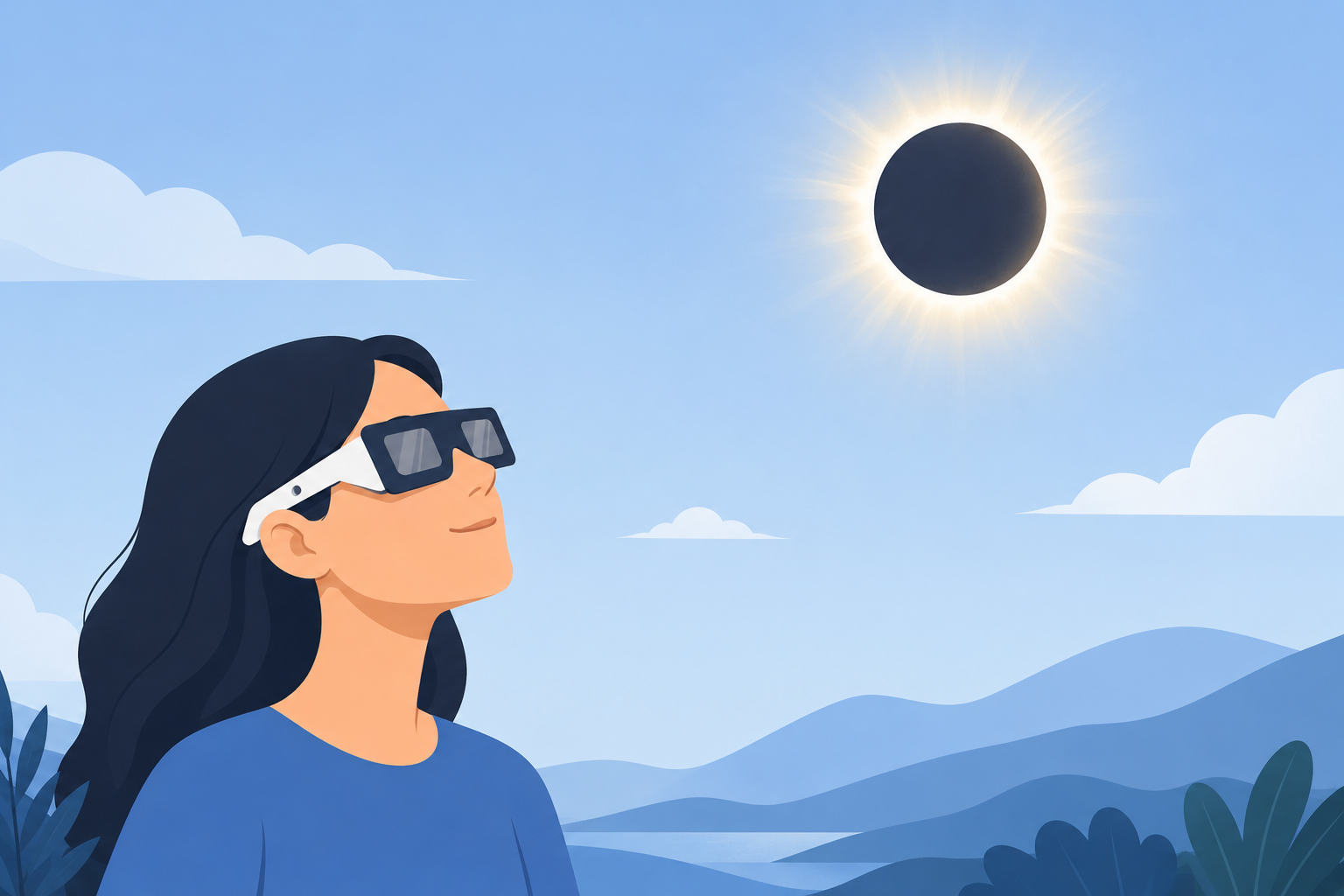
On Wednesday 12th August 2026, we'll have the chance to witness one of nature's most spectacular events - a solar eclipse.
Watching the Moon completely cover the Sun is a truly unforgettable experience. But it's also important to know how to view it safely.
Why can't I look directly at the Sun?
Even when the Sun is mostly covered by the Moon, its rays are still strong enough to damage your eyes. Looking directly at the Sun without the right protection can harm the retina – the part of your eye that allows you to see clearly. The worrying part is that this damage doesn't hurt at the time, so you may not realise anything is wrong until later.
Are sunglasses enough?
No. Even the darkest sunglasses are not safe for looking at the Sun during an eclipse. If you want to watch the eclipse, you should only use special eclipse glasses that meet the ISO 12312-2 safety standard.
When is it safe to look without eclipse glasses?
Only during the short period of totality - when the Moon completely covers the Sun. This only happens if you're in the path of totality. As soon as even a tiny part of the Sun reappears, you must put your eclipse glasses back on.
What should I look out for afterwards?
If you've looked at the Sun and notice any of these symptoms afterwards, it's a good idea to have your eyes checked:
• Blurred vision
• A dark or blurry spot in the centre of your vision
• Straight lines looking wavy
• Colours appearing less bright
Your eyesight is precious, and a few simple precautions can help keep it safe while you enjoy this incredible event. If you have any concerns about your vision, or it's time for your routine eye examination, we're always happy to help. Our team is here to keep your eyes healthy, so you can enjoy special moments like a solar eclipse with confidence.